The "Coca-Cola" Route
Marangu Route
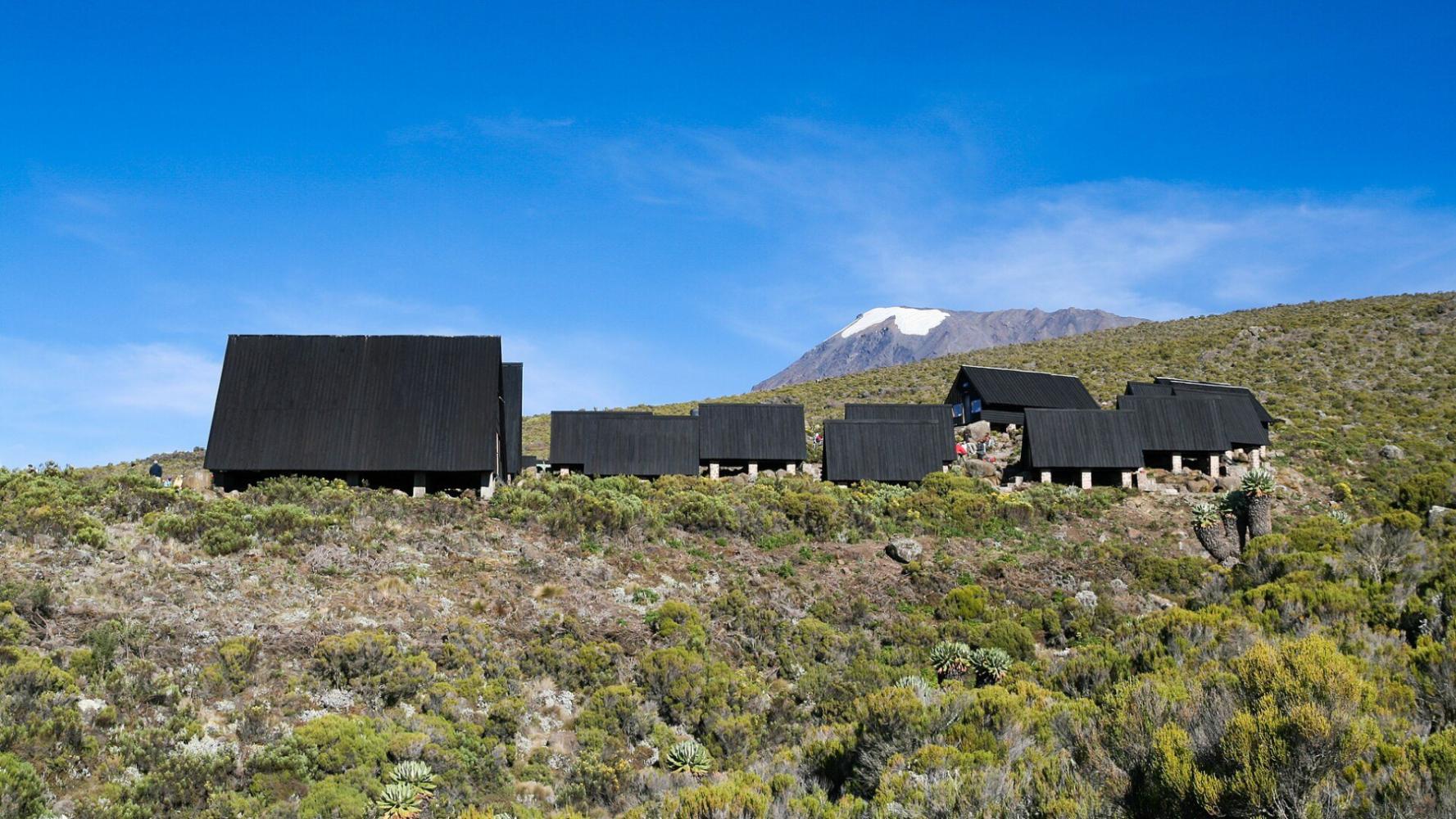
The only Kilimanjaro route with mountain huts instead of tents.
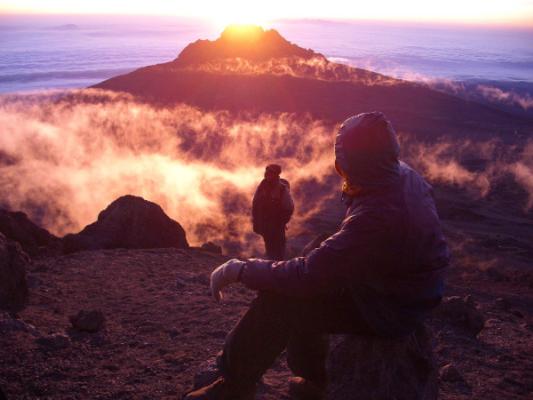
Photo: Christoph Strässler from Oberdorf BL, Schweiz, CC BY-SA 2.0
- Duration
- 5–6 days
- Distance
- 72 km
- Summit
- 5,895 m
- Sleeping
- Mountain huts
- Crowds
- Busy
- Difficulty
- Moderate
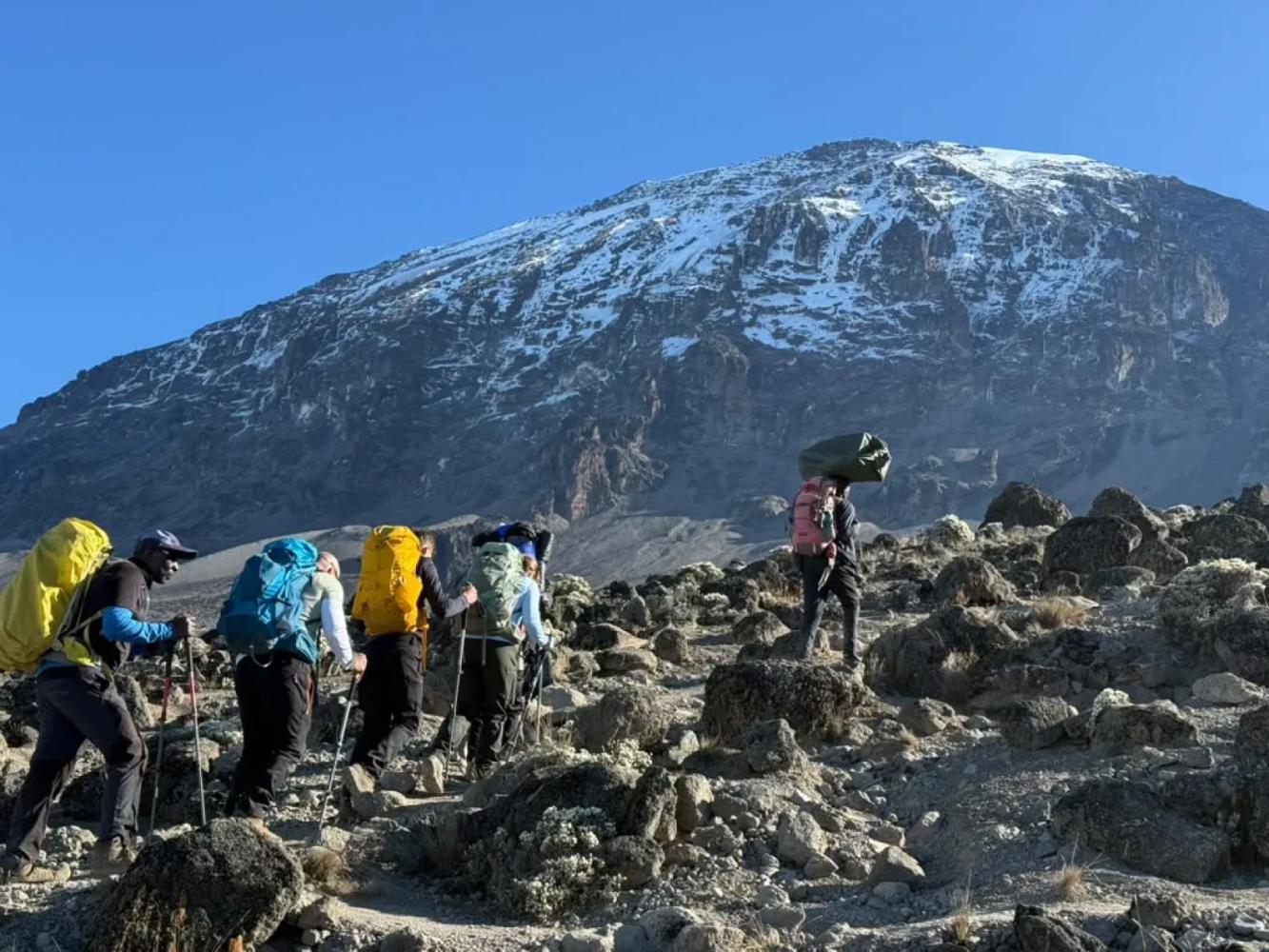
The Marangu Route is the oldest route on Kilimanjaro and the only one where you sleep in huts. It climbs and descends the same trail on the south-east side, reaching the crater rim at Gilman's Point.
Marangu is Kilimanjaro's original route and still the only one with permanent accommodation. Instead of tents you sleep in A-frame huts with bunk beds and mattresses at Mandara (2,720 m), Horombo (3,720 m) and Kibo (4,720 m), with shared dining halls. It is nicknamed the "Coca-Cola" route because soft drinks were once sold at the huts, and because it was thought to be the easy option.
A Gentle Trail, But Not an Easy Summit
The path is the best graded on the mountain and the daily walks are steady rather than steep. The catch is the altitude profile: Marangu gains height quickly and offers no natural "walk high, sleep low" day. That is why the five-day climb has one of the lowest summit success rates on Kilimanjaro. Take the six-day version, which adds an acclimatisation day at Horombo Hut with a walk up to Zebra Rocks at about 4,000 m.
The Saddle and Gilman's Point
Above Horombo the trail crosses the Saddle, a wide alpine desert between Kilimanjaro's two main peaks, Kibo and the jagged Mawenzi. From Kibo Hut the summit climb zigzags up scree to Gilman's Point (5,685 m) on the crater rim, then continues around the rim for one and a half to two hours to Uhuru Peak.
Same Way Up and Down
Marangu is the only route that descends the way it came, so you see the same scenery twice. The huts must be booked in advance and the route is busy in high season. In the rainy months the huts are a real advantage.
Why Choose This Route
- Sleep in huts with bunk beds: no tents needed
- The best-graded path on the mountain
- The Saddle, the alpine desert between Kibo and Mawenzi
- A good choice in the rainy season
Good to Know
- The five-day climb has a low summit success rate: choose six days
- You climb and descend the same trail
- Huts are shared dormitories and the route is busy in high season
- Summit night to Uhuru Peak via Gilman's Point is long
Route Map
Map of the Marangu Route
The trail as it runs on the ground, with every gate, camp and high point. Press a place in the list to find it on the map.
Altitude
Altitude Profile
How high you climb, and where you sleep. Dips in the line are "walk high, sleep low" days, which help your body adjust.
Day by Day
Marangu Route Itinerary
Register at Marangu Gate (1,860 m) and climb a well-made path through the rainforest, home to blue monkeys and black-and-white colobus. From Mandara Hut a short walk leads to Maundi Crater for views towards Kenya.
Overnight: Mandara Hut
Leave the forest for open heath and moorland dotted with giant groundsels and lobelias. On a clear day both Kibo and Mawenzi are in view for most of the walk.
Overnight: Horombo Hut
A day to adjust to the altitude. Walk up to Zebra Rocks, a striped cliff at about 4,000 m, then return to Horombo to rest. This extra day makes a real difference on summit night.
Overnight: Horombo Hut
Pass the Last Water Point and cross the Saddle, the high desert between Mawenzi and Kibo. Reach Kibo Hut by mid-afternoon for an early dinner and a few hours of rest before the summit.
Overnight: Kibo Hut
Start around midnight and zigzag up the scree to Gilman's Point (5,685 m) on the crater rim, then follow the rim past Stella Point to Uhuru Peak for sunrise. Descend to Kibo Hut for a rest and continue down to Horombo.
Overnight: Horombo Hut
A long, easy descent through moorland and forest to Marangu Gate, where you collect your summit certificate.
Good to Know
Marangu Route: Frequently Asked Questions
Is the Marangu Route the easiest way up Kilimanjaro? +
The path is the gentlest, but the route gains altitude quickly, so the five-day climb has a low summit success rate. With the six-day itinerary and its acclimatisation day at Horombo, it is a good choice.
What are the huts like on the Marangu Route? +
Mandara and Horombo have A-frame huts sleeping four to eight people on bunk beds with mattresses; Kibo Hut has larger dormitories. There are shared dining halls and basic washrooms. You still need a warm sleeping bag.
Why is it called the Coca-Cola Route? +
Soft drinks used to be sold at the huts along the way, and the route was seen as the easier option compared with the "Whiskey" (Machame) route.
Compare
Other Routes up Mount Kilimanjaro
 6–7 days
We climb this
6–7 days
We climb this
The "Whiskey" Route
Machame Route
Kilimanjaro's most popular route: rainforest, the Lava Tower and the Barranco Wall.
- Distance
- 62 km
- Difficulty
- Challenging
- Sleeping
- Camping
- Crowds
- Busy
 7–8 days
We climb this
7–8 days
We climb this
Lemosho Route
The most beautiful way up: a quiet western start across the Shira Plateau.
- Distance
- 70 km
- Difficulty
- Challenging
- Sleeping
- Camping
- Crowds
- Moderate traffic
 6–7 days
We climb this
6–7 days
We climb this
Rongai Route
The quiet northern approach, from the Kenyan border side.
- Distance
- 73 km
- Difficulty
- Moderate
- Sleeping
- Camping
- Crowds
- Quiet
Ready to Climb Mount Kilimanjaro?
Tell us your dates, your fitness and what you want to see. We will recommend the mountain and route that give you the best chance of a great climb.
Plan Your Safari