
Mount Kilimanjaro
Africa's highest peak at 5,895 m, a once-in-a-lifetime climb to the Roof of Africa.
- Summit
- Uhuru Peak, 5,895 m
- Best time
- Jan–Mar & Jun–Oct
- Climb length
- 6–9 days
- Popular routes
- Machame, Lemosho, Marangu
Discover Mount Kilimanjaro
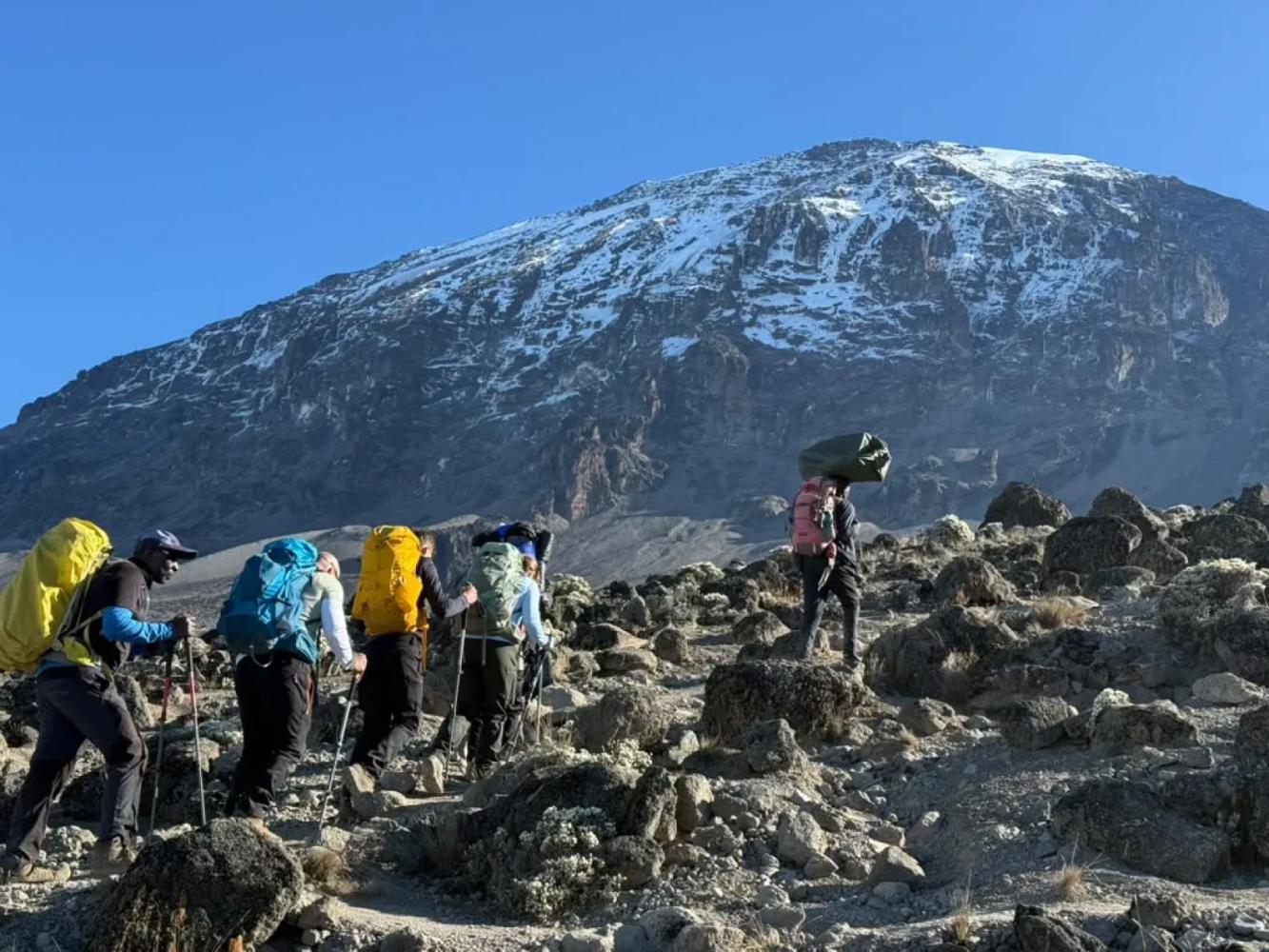
Mount Kilimanjaro is the highest mountain in Africa and the tallest free-standing mountain in the world, rising to 5,895 metres at Uhuru Peak on the rim of its Kibo crater. Climbing it requires no technical mountaineering skills, which puts the summit within reach of fit, well-prepared hikers, but the altitude makes it a serious challenge that rewards good planning, experienced guides and a well-paced route. Kilimanjaro National Park is a UNESCO World Heritage Site.
From Rainforest to Glaciers
A Kilimanjaro climb takes you through five distinct climate zones in a matter of days: farmland on the lower slopes, lush montane rainforest with colobus monkeys, heath and moorland dotted with giant groundsels, the stark alpine desert, and finally the arctic summit zone with its glaciers and ice cliffs. Reaching the summit at sunrise, above the clouds, is an unforgettable moment.
Choosing Your Route
The routes vary in scenery, difficulty and time. Lemosho and Machame are among the most scenic and have high summit success rates thanks to good acclimatisation profiles. Marangu is the only route with hut accommodation, while Rongai approaches from the drier north. We recommend at least seven days on the mountain: every extra day of acclimatisation improves your chances of reaching the top safely.
When to Climb
The best months are January to mid-March and June to October, when the weather is driest. It is possible to climb outside these months, but expect more rain on the lower slopes and snow near the summit.
Where It Is
Mount Kilimanjaro on the Map
Why Go
Highlights of Mount Kilimanjaro
- Uhuru PeakStand on the Roof of Africa at 5,895 metres above sea level.
- No technical climbingA trek, not a climb: no ropes or mountaineering experience required.
- Five climate zonesFrom tropical rainforest to arctic glaciers in a single journey.
- Sunrise summitWatch the sun rise over the clouds and the plains of Africa.
- Scenic routesLemosho and Machame offer spectacular views and good acclimatisation.
- Safari add-onEasy to combine with a safari in the Serengeti or a Zanzibar beach stay.
Signature Journeys
Mount Kilimanjaro Safaris
Good to Know
Mount Kilimanjaro FAQs
How long does it take to climb Kilimanjaro? +
Most climbs take between six and nine days, depending on the route. We recommend at least seven days, as a longer climb gives your body more time to acclimatise and significantly improves summit success.
Do I need climbing experience to climb Kilimanjaro? +
No technical experience is needed, but you should be in good physical health and train with regular hiking beforehand. The main challenge is the altitude, which is why a gradual route and experienced guides matter.
Which is the best route up Kilimanjaro? +
For most climbers we recommend the Lemosho or Machame routes, which combine beautiful scenery with good acclimatisation. The best route for you depends on your fitness, budget and time.
When is the best time to climb Kilimanjaro? +
The driest and most popular months are January to mid-March and June to October. The long rains from April to May make the climb wetter and more difficult.
Keep Exploring
More Tanzania Destinations
Plan Your Mount Kilimanjaro Safari
Tell us when you'd like to travel and what you'd love to see — we'll design a private itinerary around Mount Kilimanjaro.
Plan Your Safari